
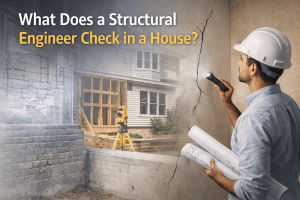
If you’ve noticed cracks in your walls, sloping floors, or sticking doors, you might be wondering whether it’s cosmetic or something more serious.
A structural engineer looks at the parts of your home that actually carry load and keep it stable: the foundations, load-bearing walls, framing, roofing structure, flooring system, and the surrounding drainage conditions. The goal isn’t just to identify damage, but to understand why it’s happening and whether it poses any structural risk.
In many cases, issues turn out to be minor. In others, early assessment can prevent more expensive problems later.
Why a Standard Building Inspection Isn’t Always Enough
Pre-purchase building inspections are valuable, but they’re typically generalist inspections. They often focus on:
- Plumbing leaks
- Electrical systems
- Roofing condition
- Visible maintenance issues
What they don’t always assess in depth is the structural performance of the home, how loads move through the building and whether movement or cracking suggests foundation stress.
If cracking, movement or renovation plans are involved, a structural engineer provides a more technical assessment grounded in Australian Standards such as AS 2870 (Residential Slabs and Footings) and AS 1684 (Timber Framing).
1. The Foundation
In Australia, soil conditions — particularly reactive clay — are one of the most common contributors to structural movement.
During an inspection, an engineer will look for:
Cracking patterns
- Fine vertical hairline cracks are often normal settlement.
- Stair-step cracks in brickwork can indicate movement in the footing system.
- Horizontal cracking may suggest lateral pressure or more significant stress.
Signs of differential settlement
- Sloping floors
- Misaligned door frames
- Windows that suddenly stick
- Gaps forming at cornices or skirting boards
Movement patterns matter more than individual cracks. The key question is whether the structure is stable or still moving.
Engineers also assess whether slab performance aligns with expected site classification under AS 2870.
2. Load-Bearing Walls and Structural Framing
Every home relies on a continuous load path, the transfer of weight from the roof down through walls and into the foundations.
An engineer checks that this load path hasn’t been interrupted.
This includes looking for:
- Cracking above doors and windows
- Sagging lintels
- Bowing or leaning walls
- Signs that walls may have been removed or altered without structural consideration
In older homes, especially, renovations sometimes remove walls assumed to be non-load-bearing. A structural review confirms whether the framing is still adequately supported.
3. The Roof Structure
In most Australian regions, wind loads are a more significant design consideration than snow loads.
Engineers inspect:
- Roof trusses or rafters for cracking or splitting
- Signs of sagging ridgelines
- Roof “spreading” pushing external walls outward
- Long-term deflection or overstressed members
The roof must transfer wind and gravity loads safely down through the structure. Any weakness in that chain can create future issues.
4. Flooring System and Subfloor
If floors feel uneven, bouncy, or noticeably sloped, the issue often lies beneath.
An engineer assesses:
- Joist sizing and spacing
- Span lengths relative to load
- Signs of excessive deflection
- Compliance with framing standards
They also check for:
- Moisture damage
- Timber Rot
- Termite activity
Compromised timber significantly reduces structural capacity and often requires targeted rectification rather than surface repairs.
5. Drainage and Site Conditions
One of the most overlooked causes of foundation movement is poor drainage.
Engineers assess:
- Whether ground levels fall away from the house
- Downpipe discharge locations
- Ponding near slab edges
- Evidence of long-term moisture imbalance
In reactive clay regions, inconsistent moisture levels can cause soil expansion and contraction, leading to slab movement. Often, improving drainage is a critical part of the solution.
What Happens During a Structural Inspection?
A typical residential structural assessment includes:
- Visual inspection of key structural elements
- Crack measurement and floor level observations where required
- Review of roof space or subfloor (if accessible)
- Assessment of drainage and site conditions
- A written report outlining:
- Whether movement appears cosmetic or structural
- Likely causes
- Risk level
- Practical next steps
Not every issue requires major repair. In many cases, early advice provides reassurance or minor corrective measures before problems escalate.
When Should You Call a Structural Engineer?
You should consider engaging a structural engineer if:
- Cracks are widening or reappearing
- Floors feel uneven or noticeably sloped
- Doors or windows suddenly begin sticking
- You’re purchasing an older property with visible movement
- You’re planning structural renovations
- A building inspector recommends further investigation
Early assessment often reduces uncertainty and unnecessary expense.
Residential Structural Advice in Australia
At Ardent Engineers, we provide practical structural assessments tailored to Australian soil conditions, wind loads, and compliance requirements.
Our focus is simple: clear answers, honest advice, and solutions that are buildable and proportionate to the issue.
If you’re concerned about movement in your home or planning structural changes, we’re happy to assess your situation and provide straightforward engineering guidance.
Request a Quote to arrange a structural assessment.
